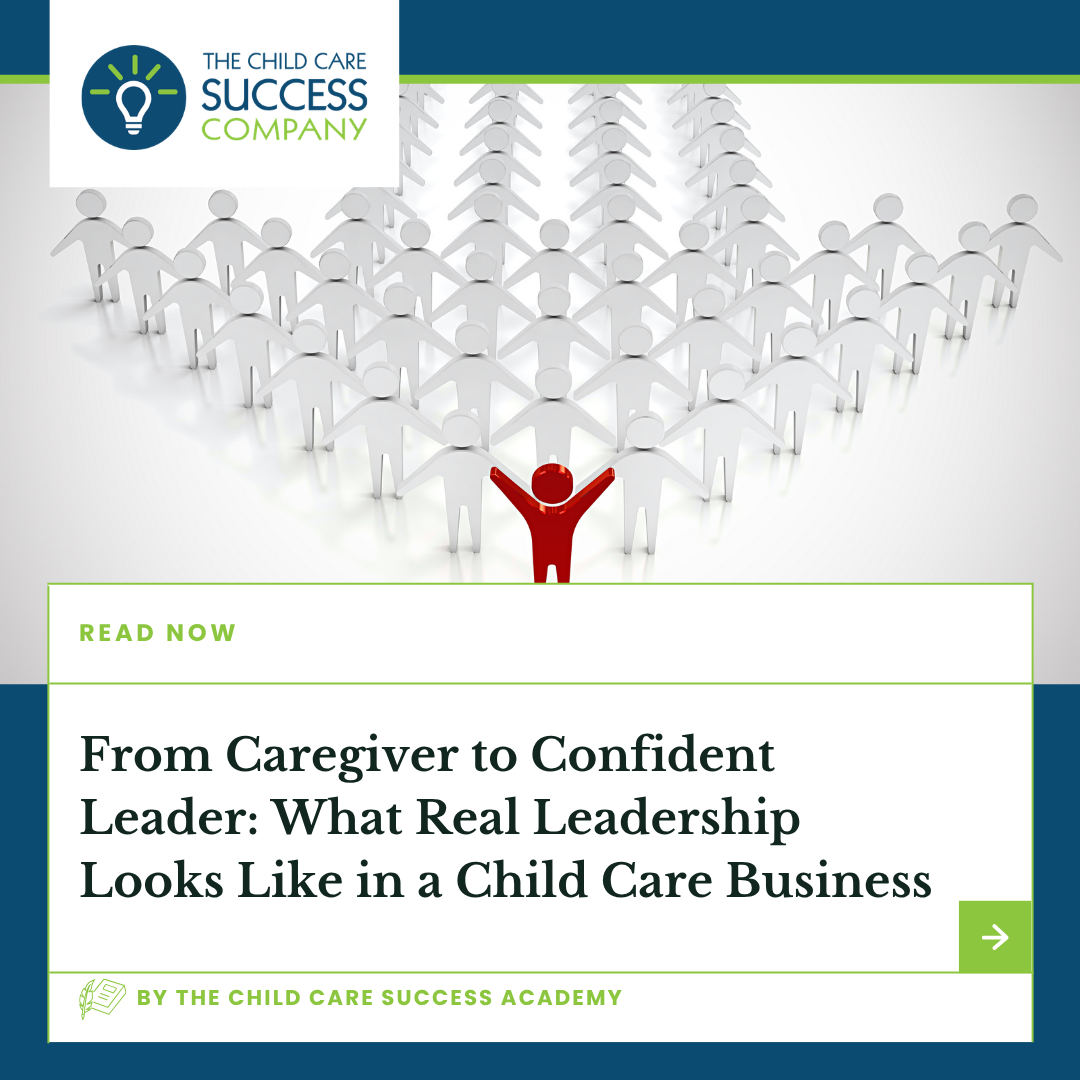
The child care industry is built on compassion, patience, and a deep commitment to serving children and families. But sustaining a thriving child care business takes more than heart alone. It requires courageous leadership, clear vision, and the ability to guide people through constant change. True leadership in an early childhood setting is not defined by a job title or years of experience. It is defined by consistency, clarity, and the willingness to grow alongside the people you lead.
Many professionals enter the field as caregivers first. They love working with children, supporting families, and making a difference during the most formative years of life. Over time, that role often expands. A teacher becomes a lead. A lead becomes a director. Eventually, many step into ownership or executive leadership. The transition from caregiver to confident leader can feel overwhelming, especially when no one teaches you how to lead a team while also running a complex ECE business.
Leadership Is the Foundation of Every Successful Center
Whether overseeing a single-site preschool or managing multiple early learning locations, leadership is the foundation that holds everything together. A child care owner is not simply managing schedules, ratios, or compliance requirements. They are shaping the first educational system children experience and the first professional environment many educators will ever work in.
That responsibility extends far beyond operational tasks. Leadership influences how staff communicate, how families feel welcomed, and how challenges are handled when things do not go as planned. Without strong leadership, even the best curriculum or most beautiful facility will struggle to create lasting impact.
Clarity Cuts Through the Chaos
One of the greatest challenges leaders face in a child care business is decision fatigue. Every day requires hundreds of choices, from staffing coverage and parent concerns to budgeting and licensing compliance. Without clarity, it is easy to become reactive, constantly putting out fires while losing sight of long-term goals.
Effective leaders start with a clear mission, defined values, and non-negotiable expectations. This clarity acts as a filter for decision-making. When leaders know why their organization exists and what it stands for, choices become easier and more consistent. Teams feel more confident when expectations are clear, and alignment becomes possible.
Leaders who thrive in the ECE business intentionally build their programs around a strong framework. Hiring practices, classroom models, policies, and even financial decisions should reflect the center’s purpose. When vision leads, excellence follows naturally.
Emotional Intelligence Is Essential, Not Optional
In a field centered on social-emotional development, emotional intelligence is not a “nice-to-have” skill. It is a leadership requirement. Strong leaders know how to remain calm under pressure, respond thoughtfully instead of reacting emotionally, and create environments where staff feel safe being honest.
Emotional intelligence does not mean avoiding difficult conversations. On the contrary, it means addressing issues directly while maintaining respect and empathy. It means recognizing the difference between burnout and disengagement, and responding appropriately. Leaders who listen more than they speak often gain deeper insight into what their teams truly need.
For any child care owner, emotional intelligence sets the tone for the entire organization. When leadership models self-awareness and emotional regulation, staff are more likely to do the same.
Systems Create Stability and Trust
Many child care leaders wear multiple hats, especially in the early stages of growth. It is common for one person to serve as director, HR manager, curriculum coordinator, and problem-solver all at once. While this level of involvement may be necessary initially, it is not sustainable long-term.
Strong leaders build systems that allow their centers to operate effectively without constant intervention. Systems are not about control; they are about consistency. Clear onboarding processes, documented procedures, classroom observation tools, and communication policies reduce confusion and increase confidence.
When staff know what to expect, trust grows. Systems create stability, which allows leadership to focus on strategy rather than survival. In a well-run child care business, systems support people instead of replacing them.
Courageous Leadership Means Making Hard Decisions
Leadership in early childhood education is not always comfortable. There are moments when leaders must make decisions that feel heavy, even when they are necessary. Letting go of a team member who no longer aligns with the center’s values. Raising tuition to maintain financial sustainability. Declining opportunities that do not support long-term goals.
Strong leaders do not avoid hard choices. They approach them with compassion, transparency, and courage. They understand that short-term discomfort often protects the long-term health of the organization. Avoiding difficult decisions may feel kind in the moment, but it often leads to greater challenges later.
Leadership Is Meant to Be Multiplied
One of the most overlooked responsibilities of a child care leader is developing leadership in others. When a team depends on one person to solve every problem, growth stalls. True leadership is not about being indispensable; it is about building others up.
Effective leaders create opportunities for assistant directors, lead teachers, and administrative staff to grow. They invite team members into planning conversations, encourage independent decision-making, and treat mistakes as learning opportunities rather than failures.
In a thriving ECE business, leadership is shared. Authority is not hoarded; it is multiplied. This approach strengthens the organization and prepares it for sustainable growth.
Culture Is Built Through Daily Actions
A center’s culture is not defined by mission statements posted on the wall. It is defined by daily behaviors. How leadership handles conflict. How appreciation is expressed. How families and staff are spoken about when no one else is listening.
If gossip is common, leaders must examine whether transparency has been modeled. If burnout is widespread, boundaries may not be respected. A healthy culture does not happen by accident. It is intentionally cultivated, and it always starts at the top.
For every child care owner, culture is one of the most powerful tools available. It influences retention, reputation, and overall program quality.
Growth Requires Ongoing Learning
The child care field is evolving rapidly. Expectations from families are increasing. Staffing challenges remain real. Burnout is a growing concern across the industry. Within these challenges lies an opportunity for leaders to evolve.
The most effective leaders commit to continuous learning. They seek mentorship, invest in professional development, and surround themselves with peers who challenge and support them. They are not afraid to adapt their leadership style as their organization grows.
Leadership in a child care business is not about having all the answers. It is about being willing to ask better questions and remain open to growth.
Leading With Purpose and Confidence
Leadership in early childhood education is about more than keeping operations running. It is about casting a clear vision, developing people, and building systems that support long-term success. It requires knowing when to hold firm and when to let go, when to lead from the front and when to step back.
The children served by the child care industry deserve environments led by confident, compassionate, and committed leaders. When leadership is rooted in clarity, courage, and growth, everyone benefits, from staff and families to the children themselves.
Becoming a confident leader is a journey. But for those willing to embrace it, the impact reaches far beyond the walls of any single center.
Ready to Step Into Confident Leadership?
You don’t have to navigate leadership growth alone. Whether you’re feeling stuck in day-to-day operations, struggling to build systems, or ready to lead your team with more clarity and confidence, support makes a difference.
Book a strategy call with one of our experienced coaches to gain personalized insight, practical next steps, and a clear path forward for your child care business. This no-pressure conversation is designed to help you identify opportunities, overcome challenges, and move toward sustainable growth.
Schedule your strategy call today and take the next step from caregiver to confident leader.