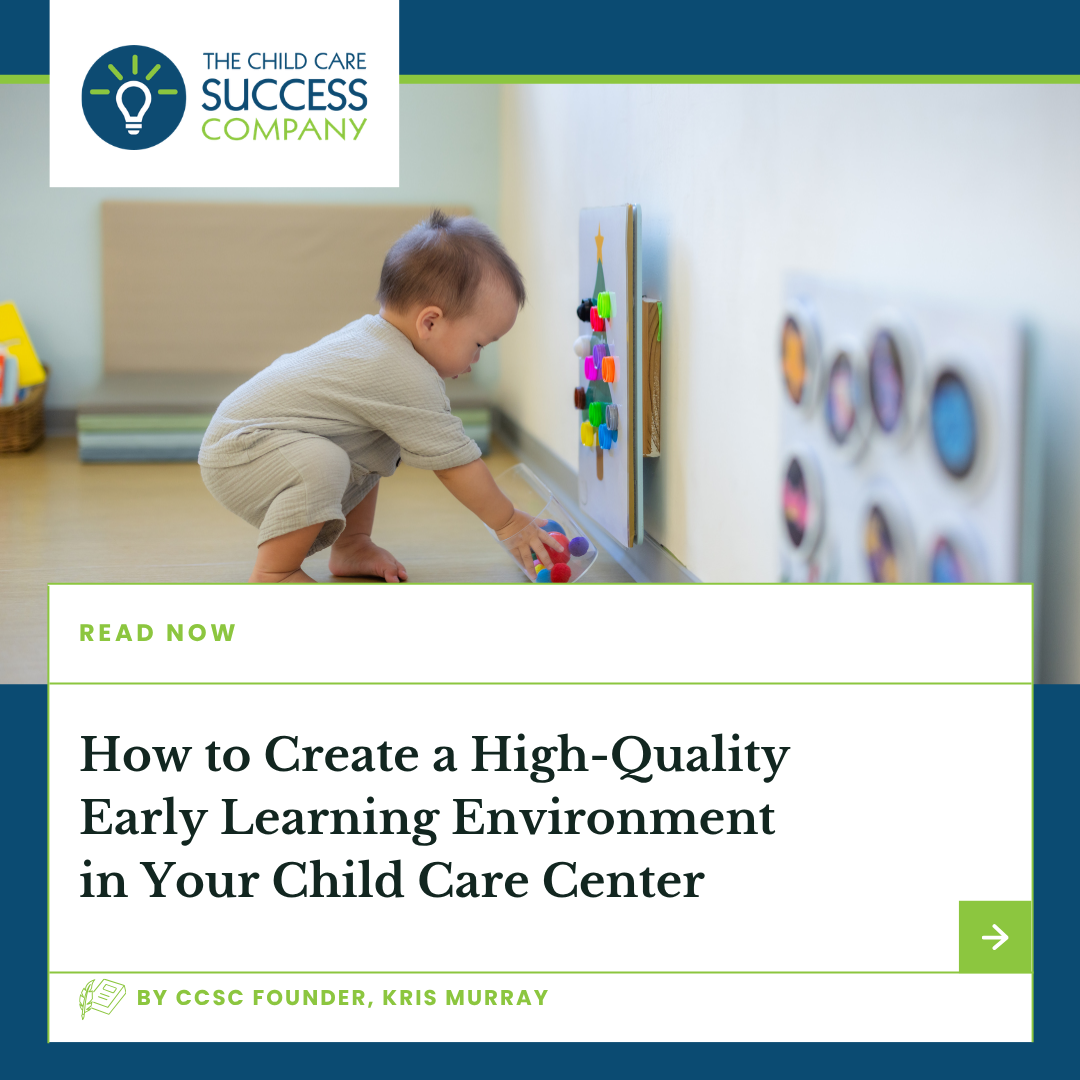
Creating a high-quality early learning environment is essential for children’s development, well-being, and readiness for school. At The Child Care Success Company, we believe every child care center has the potential to build a space that encourages curiosity, creativity, and growth. When you implement these key elements into your center, you not only create a stronger foundation for the children in your care but also gain a powerful marketing advantage.
Highlighting these features in your outreach to parents demonstrates your commitment to excellence, setting your center apart from the competition and making it a trusted choice in your community. Here are some of the core elements that make a high-quality early learning environment.
- Engage in Intentional Space Planning
The physical setup of a classroom plays a crucial role in children’s learning and engagement. Spaces should feel inviting and be organized to encourage movement, exploration, and focused activity.
- Separate Activity Areas: Create distinct areas for different activities, such as reading, dramatic play, sensory exploration, and science.
- Minimize Clutter: Keep the space tidy and organized to reduce overstimulation and improve focus.
- Incorporate Developmentally Appropriate Materials
Using age-appropriate and diverse materials allows children to build essential skills while enjoying activities that match their interests and developmental stages.
- Rotating Materials: Regularly rotate toys and resources to keep the environment fresh and engaging.
- High-Quality, Open-Ended Resources: Items like blocks, art supplies, and dress-up clothes promote imaginative play and problem-solving.
- Focus on Health and Safety Standards
A clean, safe environment is foundational to a high-quality child care experience.
- Regular Cleaning Protocols: Ensure all toys, surfaces, and equipment are disinfected frequently.
- Child-Proofing Measures: Use gates, outlet covers, and secure furniture to reduce risk.
- Implement Sensory-Rich Experiences
Children thrive on sensory input, which helps with cognitive and emotional development.
- Incorporate Natural Elements: Bring in plants, sand, and other natural elements that provide a calming effect and engage multiple senses.
- Variety of Textures: Offer a range of tactile materials such as clay, playdough, and fabric.
- Promote Positive Interactions and Relationships
Relationships form the core of a quality learning environment. Positive interactions between caregivers and children support emotional development and create a sense of belonging.
- Responsive Teaching: Respond to children’s questions and emotions with empathy and curiosity.
- Model Respectful Communication: Help children practice social skills, such as taking turns and listening.
- Small Group Work: Facilitate group activities to encourage teamwork and social development.
- Build a Daily Routine That Balances Structure with Flexibility
A predictable schedule helps children feel secure, but flexibility within that routine allows for spontaneous learning opportunities.
- Mix Active and Quiet Times: Alternate between high-energy and calm activities to keep children engaged.
- Include Free Play: Allow unstructured playtime so children can follow their interests and build decision-making skills.
- Consistency in Transitions: Use signals like songs or visuals to indicate transitions, helping children know what to expect next.
- Engage Families in the Learning Process
Family involvement strengthens the learning environment and provides continuity between home and center life.
- Regular Communication: Keep parents informed of their child’s activities and progress through newsletters or digital updates.
- Invite Family Participation: Host family days, invite parents to read to the class, or encourage them to share cultural traditions.
- Provide Resources for At-Home Learning: Share tips or activity ideas that parents can use to reinforce learning at home.
Creating a high-quality early learning environment involves thoughtful planning, continuous improvement, and a commitment to nurturing every child’s unique potential. When you focus on these elements, you’re not only providing a space where children feel safe, engaged, and inspired to learn but also adding significant value to your center. These features can become a cornerstone of your marketing, showcasing your dedication to quality and helping you stand out as a trusted leader in your community. This unique approach attracts families seeking the best for their children, setting your center apart and building long-term success.